How to Research
Brilliant new set of downloadable resources for teachers here developed by Emma McGarry and Linda Stupart in Tate Learning with artists Anna Lucas, Sovay Berriman and Clare Potter. Designed by Cameron Leadbetter
Looking as research – Anna Lucas PDF
Art School Screening – Porthmeor Studios, St Ives
My new film Art School Screening at the historic Porthmeor studios at Tate St Ives with older works and films by artists Skaer/Nashashibi, John Smith and Margaret Tait, followed by a conversation with Ben Cook, Director of LUX
https://www.eventbrite.co.uk/e/art-school-a-screening-with-anna-lucas-wednesday-30th-march-tickets-22215600459
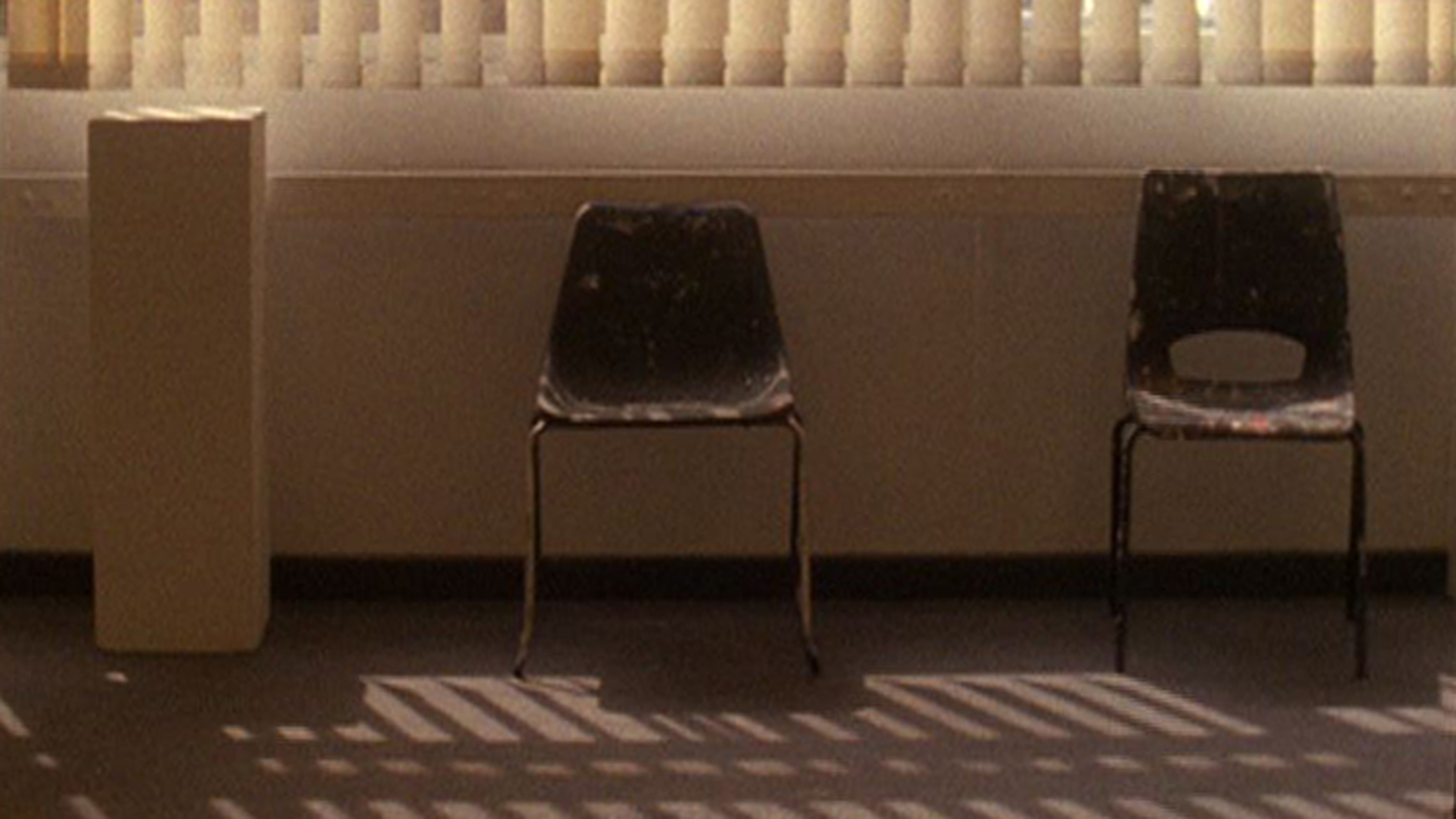
Playground 4 – publication for Tate Learning
Playground 4 includes a text about looking, images from Album 2 essays and work from In site of Conversation. Distributed to relevant teachers, organisations and individuals by Tate Learning.


Blind Movies
Delighted to have been invited to talk in the Anthropology Department at New York University, invited by insightful and brilliant writer Sukhdev Sandhu
THE COLLOQUIUM FOR UNPOPULAR CULTURE presents:
ANNA LUCAS, BLIND MOVIES – artist talk and discussion with Faye Ginsburg
— co-sponsored by the Council for the Study of Disability, NYU
WHEN: Thursday 11 February 2016, 7pm
WHERE: Kriser Film Room, 1st Floor, Department of Anthropology, 25 Waverly Place
FREE AND OPEN TO THE PUBLIC
“I feel myself incapable of following with my hand the prescription of a model: it is as if, just as I was about to draw, I no longer saw the thing. For it immediately flees, drops out of sight, and almost nothing of it remains; it disappears before my eyes, which, in truth, no longer perceived anything but the mocking arrogance of this disappearing apparition. As long as it remains in front of me, the thing defies me, producing, as if by emanation, an invisibility that it reserves for me, a night of which I could be, in some way, the chosen one. It blinds me while making me attend the pitiful spectacle.” (Jacques Derrida, Memoirs of the Blind)
BLIND MOVIES is a series of carbon drawings of movies by artist Anna Lucas. Each of them, drawn continuously for the duration of the film, is a tangle of marks, a representation of its temporal, formal and emotional density. “Drawing the film liberates the viewer from the more passive and linear mode of viewing.” (Silke Panse)
In this artist talk ANNA LUCAS will discuss the relationship between drawing and cinema, and expand on her research into visual perception at the University of Oxford’s Department of Anatomy where she focussed on three scenes from Werner Herzog’s Land of Silence and Darkness, a remarkable portrait of deaf-and-blind individuals who communicate primarily through touch.
—
ANNA LUCAS is a London-based artist whose work has been exhibited at Tate Modern, Whitstable Biennale, and Chisenhale Gallery. Her most recent films have focussed on amateur experts and technicians – among them film conservators, morticians and retired botanists.
FAYE GINSBURG, Director of the Center for Media Culture and History at New York University, is also Kriser Professor of Anthropology, and Co-Director of the NYU Council for the Study of Disability. She is currently working with Rayna Rapp on a book entitled Disability, Personhood and the ‘New Normal’ in 20th-Century America.
—
Things Unfixed
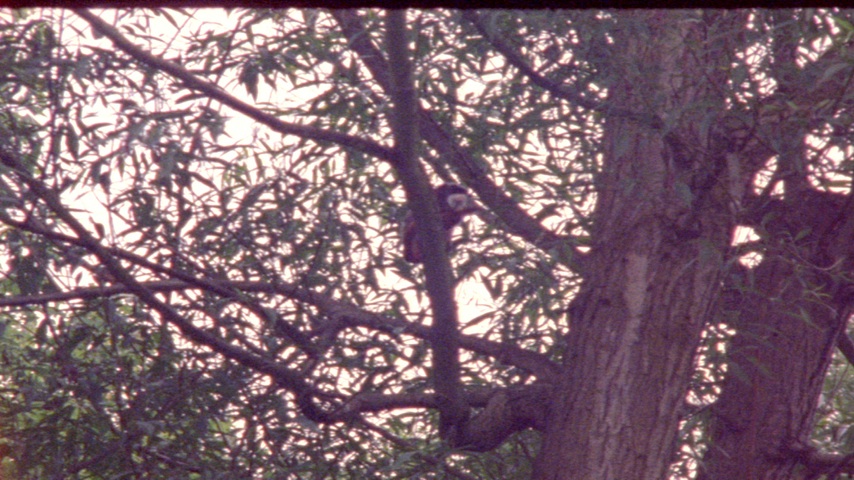 STOP BUGGING ME Frame 3:
JO ADDISON
(ends Sat 5 Dec)
Special event: Fri 4 Dec
Things unfixed a collection of short films and excerpts selected and compiled by Jo Addison and Lucy Newman
Adam Gillam, Hatty Lee, Bill Leslie, Anna Lucas,
Hollington & Kyprianou, Joanne Hooton, Lucy Newman,
Louis Nixon, Alex Schady, Kate Squires
Doors open at 6.30, screenings at 7pm
107 Essex Road London N1 2SL
The Slow Reveal – text work in progress around Opi 21, Oopsy Daisy, Tiger Lily
Following a shared conversation developed as part of the Essex Road commission for Tintype with Frances Scott, we have invited writer curator Leanne Turvey to extend the dialogue around process and practise in our films Apex, and Opi 21, Oopsy Daisy Tiger Lily. We share an interest in the role of conversation in making work and are developing a series of text based works around this. In the first instance we will be publishing a transcription of a conversation about the Tintype commission films.
Notes from one section that will not be included are here:
LT: I had been reading an article about Elizabeth Bishop’s poem Poem in The Guardian and found it in a book on my bookshelf. It is a poem about a painting:
An extract:
… Elm trees, low hills, a thin church steeple
– that grey-blue wisp – or is it? In the foreground
a water meadow with some tiny cows,
two brushstrokes each, but confidently cows;
And then to an extract from
In the Waiting Room
Where a 7 yr old (Elizabeth?) is waiting in a waiting room …
…
and while I waited I read
the National Geographic
(I could read) and carefully
studied the photographs:
the inside of a volcano,
black, and full of ashes;
then it was spilling over
in rivulets of fire.
Osa and Martin Johnson
dressed in riding breeches,
laced boots, and pith helmets.
A dead man slung on a pole
– ‘Long Pig’, the caption said.
Babies with pointed heads
wound round and round with string;
black, naked women with necks
wound round and round with wire
like the necks of light bulbs.
Their breasts were horrifying.
I read straight through.
I was too shy to stop.
And then I looked at the cover:
the yellow margins, the date.
And as I had been thinking about the National Geographic in relation to colour and the images in Opi 21, Oopsy Daisy, Tiger Lily this reminded me of the conversations we have had Anna, with Nick Addison in front of your film, about affect. (he was affected by the nails).
Physical cultural phenomenon, anthropological capturing of the ‘exotic’ in National Geographic – beauty and repulsion
Re-contextualising something
Page turning/photo juxtaposing, and with text
Both poems are about looking at images.
And they both have quite a strong narrative or cinematic presence- I have a visual point of view when reading them, and the waiting room is a top-shot, looking down on the images
Apex is mainly safe light and black – red and black – with a final flash of the full colour spectrum in the last flicker.
But both films have images (as objects) as their subject.
AL: Leanne’s references made me think of Sam Shepards’ Motel Chronicles, published by Citylights in 1982. I did not know precisely why. The first page I opened was page 79, and the first paragraph read as follows:
I used to bring Nina Simone ice. She was always nice to me. She used to call me “Dahling” I used to bring her a whole big gray plastic bus tray full of ice to cool her Scotch.
She’d peel off her blonde wig and throw it on the floor. Underneath, her real hair was short like a sheared black lamb. She’d peel off her eyelashes and paste them to the mirror. Her eyelids were thick and painted blue. They always reminded me of one of those Egyptian Queens like I had seen in National Geographic. Her skin was shining wet. She’d wrap a blue towel around her neck and then lean forward resting both elbows on her knees. The sweat rolled off her face and splashed on the red concrete floor between her feet.
Extract 9/28/80 San Francisco, CA
Although I read Motel Chronicles many years ago, I do not remember this text. But the image it conjures seems to coincide very pertinently with the text Leanne shared about the images from National Geographic in Elizabeth Bishops poem ‘Waiting Room’ and the themes around Egypt, and the surface textures of constructed beauty such as represented through the nail and wig shops of the Essex Road. And perhaps even the spaces of the psychiatric ward ‘glass tank’ and the fish tanks in the Aquarium shop.
We discussed the sense of the ‘exotic’ and how that had been flattened out or equalized perhaps through the images in Opi.
I am interested in this description in which we witness the transformation of an iconic African American singer, evoking an Egyptian queen, removing a blonde wig and eyelashes, within this backstage, changing room space: a transitional moment, between a private intimate yet casual exchange and a staged persona.
Sweat and ice. Soft blue towel and eye-shadow dust. Real black hair, and fake black lashes – the same length. A blonde wig on the red floor. Sam Shepard with Nina Simone.
What could be more exotic? Yet we understand in this moment, that they are ‘real’ people too, in a changing room. The superficial layers of colour and texture gradually being removed, re-positioned. When they both leave there will be a changing room, with a smeared mirror, an empty whisky glass and the trace of sweat on a concrete floor.
The waiting room. Also a transitional space, medical. Traces of bodies perhaps. A strand of hair, the turning of pages. Muffled sound in another space. In this space the exotic exists only in print, brought from elsewhere – on a page, in a photo of a faraway place.
On the Essex Road what might be exotic on one hand, is ordinary on the other. Adornment, embellishment, extensions – nails and hair, gel, lacquer, paint and glitter: a sort of brash camouflage occurring in the bright lights, advertising, kitchen and bathroom surfaces, amongst second hand clothes.
There does not seem to be a race, class, economic or cultural hierarchy in the nail shops, or the wearing of (fake) fur. And Essex Road presents the challenges of ‘real life’ with a direct honesty. Like Las Vegas, as Leanne proposes! Any superficiality is so obviously constructed as to reveal it’s own making – nails so long and bright, hair so lush…….human leopards, zebras and foxes; the moustachioed old record shop owner as performer on the threshold of his own collapsing stage.
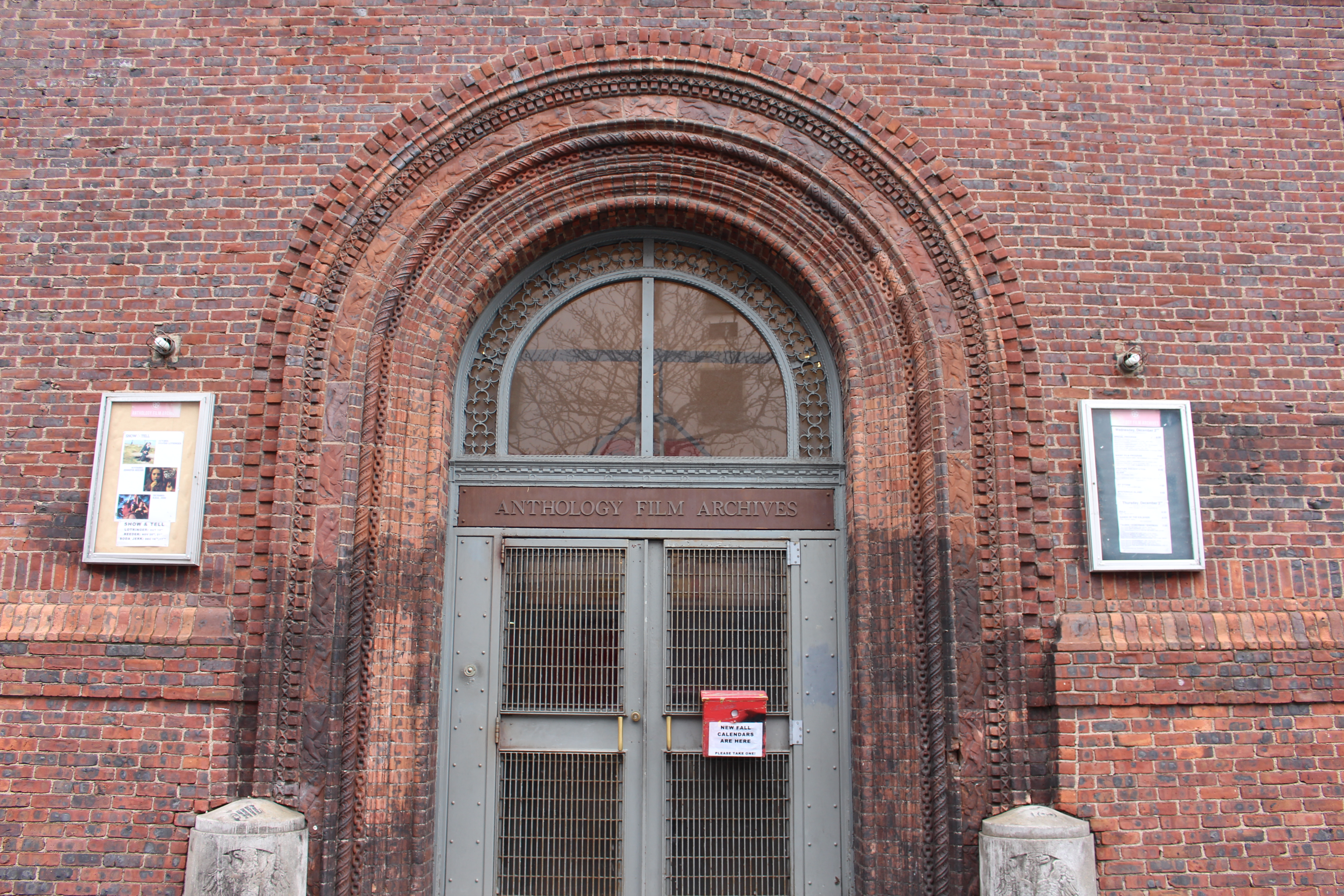
Art School at Anthology Film Archives New York
I was delighted to premiere Art School as part of The Flaherty Series at Anthology Film Archives in New York Programmed by Sukhdev Sandhu and chaired by Dan Fox, Editor at Frieze and Eugenia Bell, Executive Director, Design Observer on 30th November 2015. The Flaherty Despatch from the event is here